Kamysh-Samara
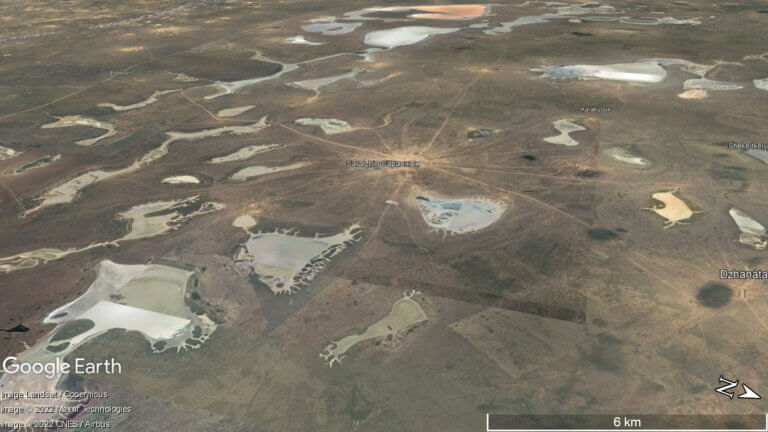
At the northern edge of the Ryn Desert is Kamysh-Samara. The 60km x 100km plain was once home to at least a dozen lakes, with

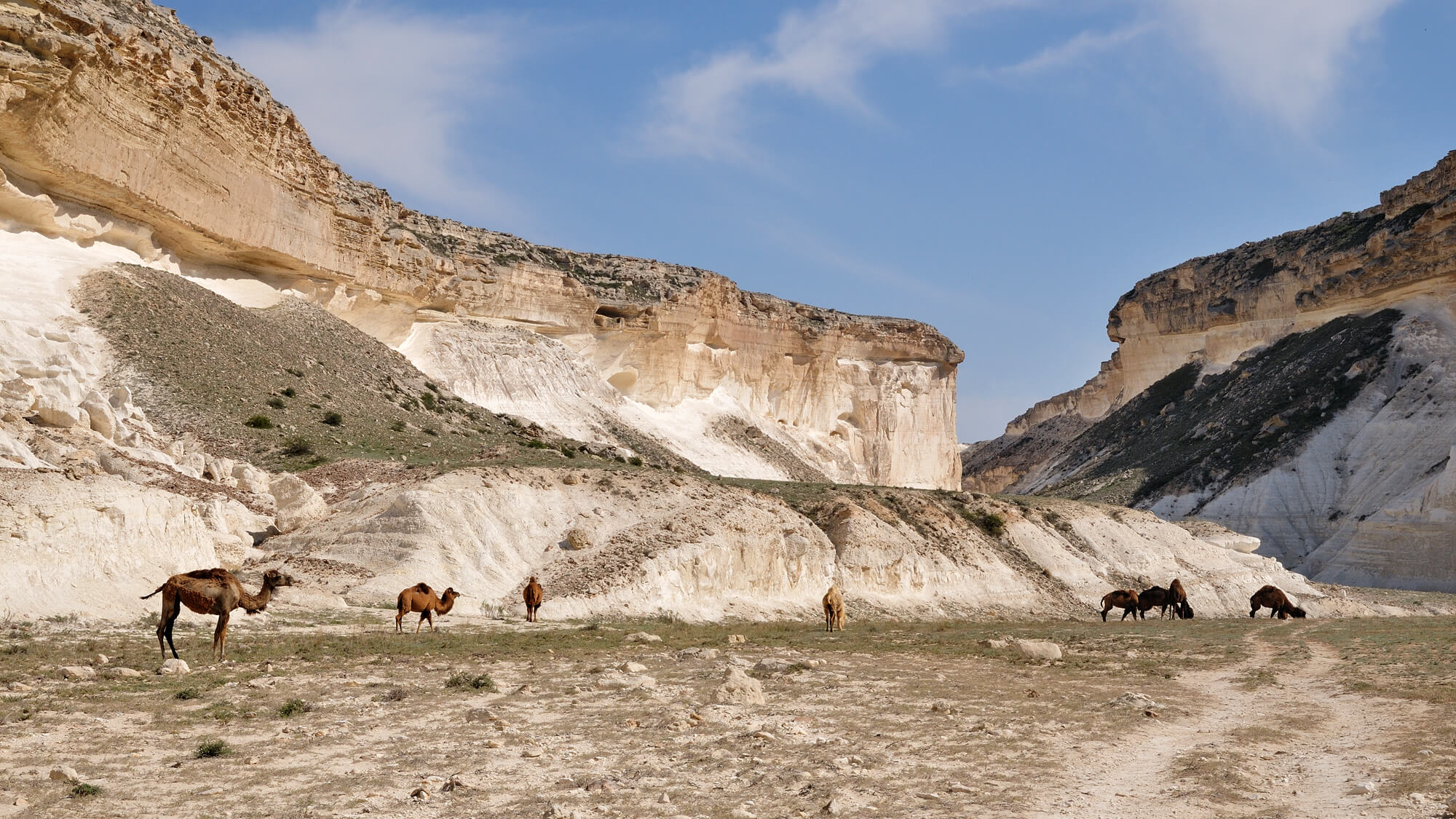
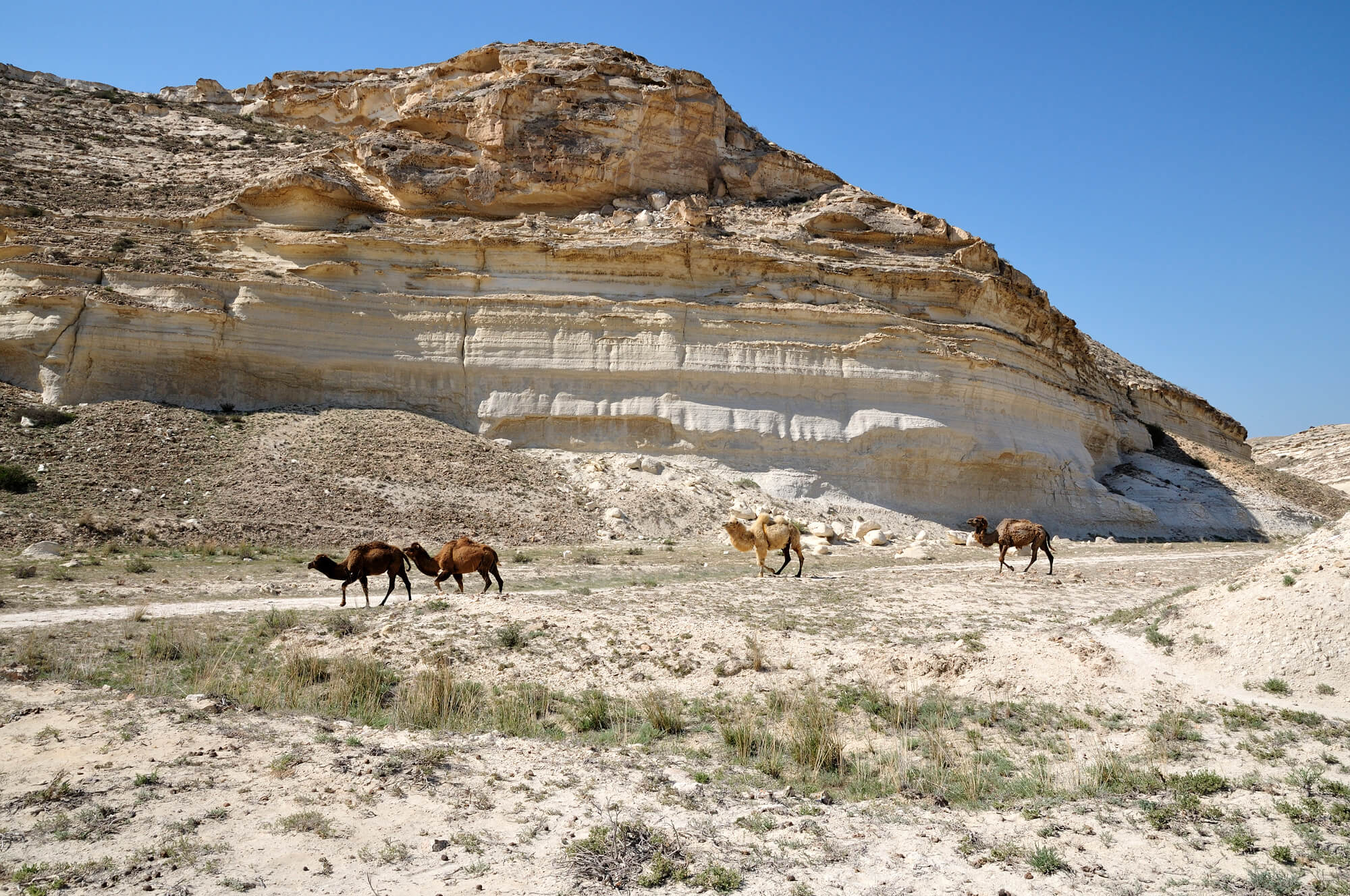
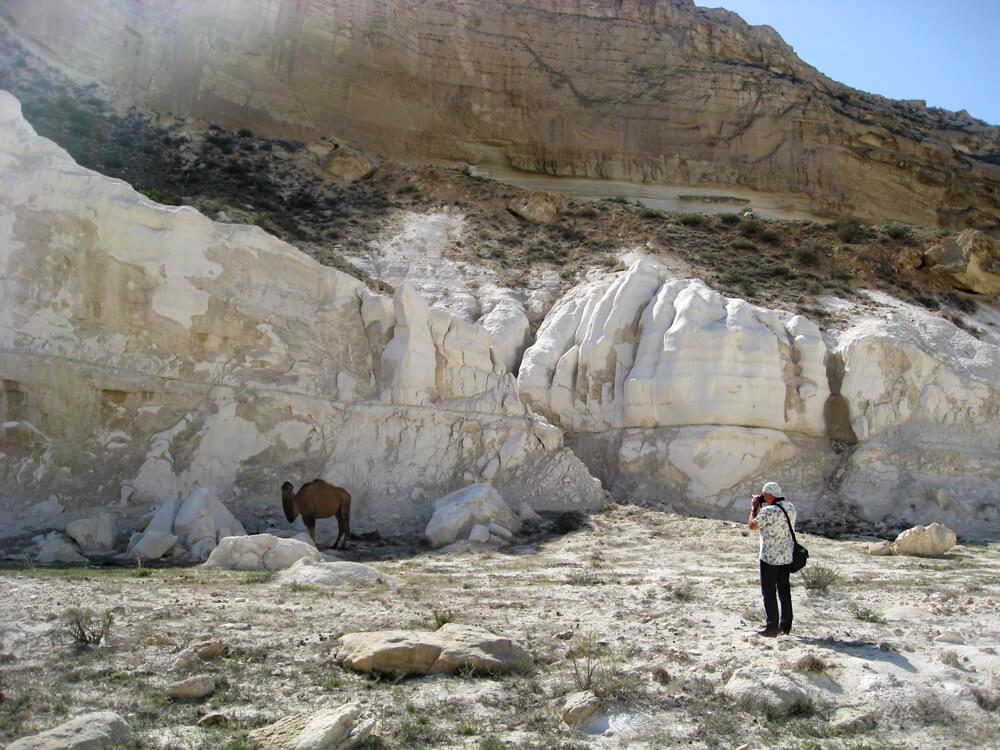
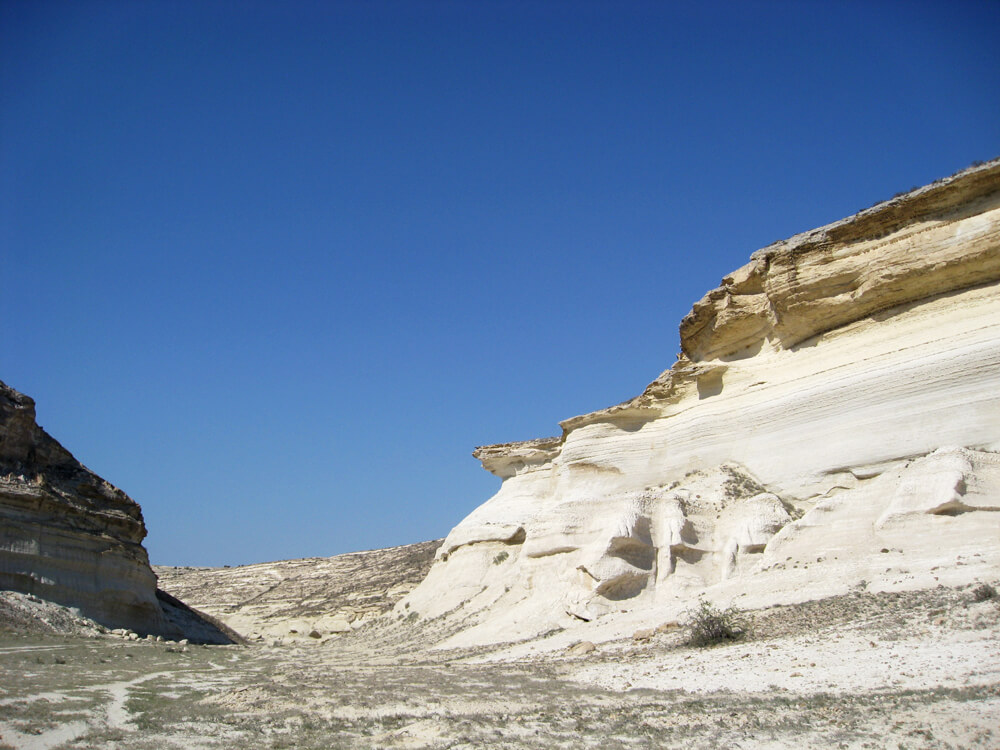
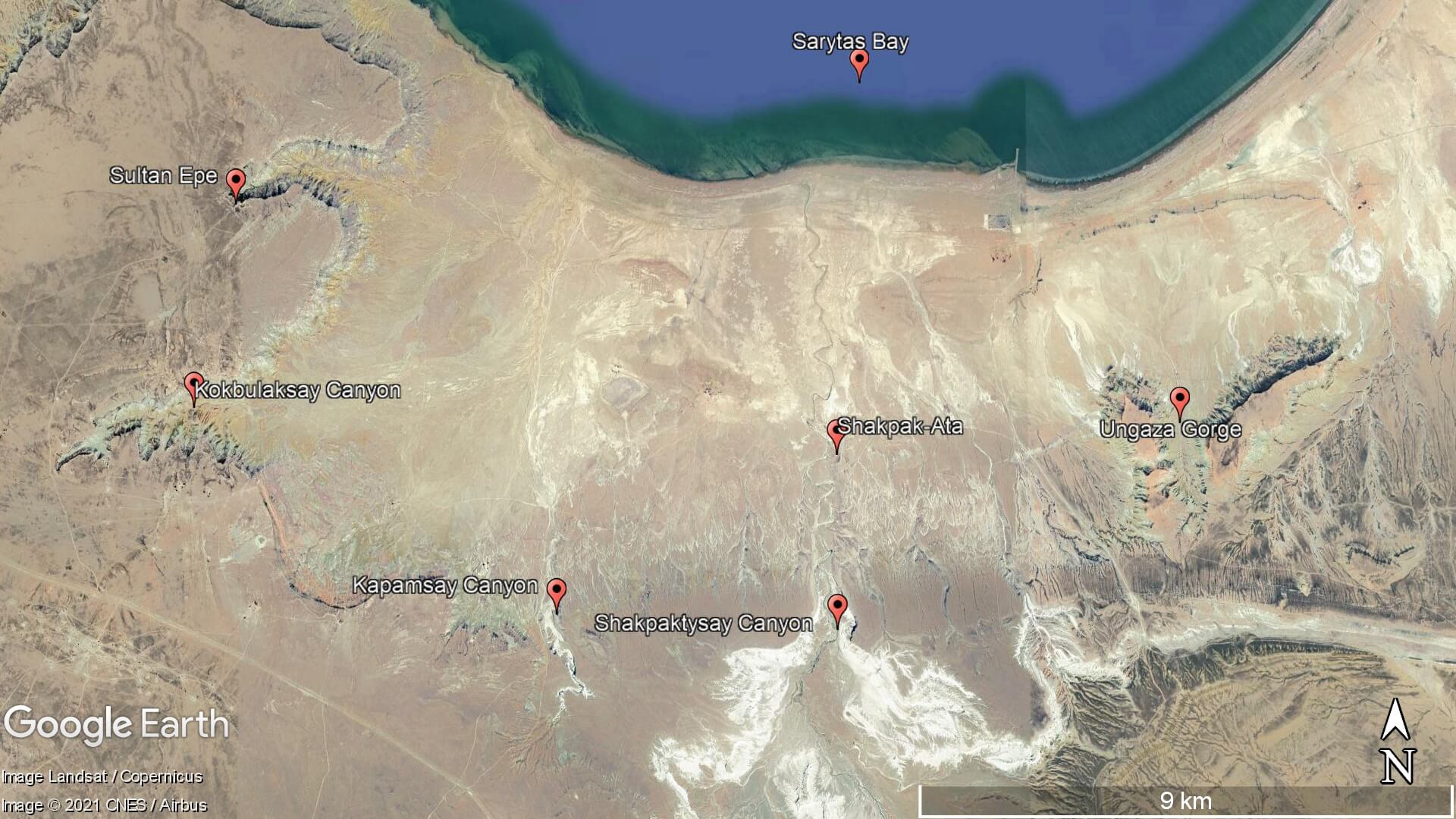
Kapamsay Canyon is a few kilometres south-west of Shakpak Ata. When approaching it from afar, you’ll see the white-sided walls of the chasm peeking up above the vegetated plateau. It’s 4km long, up to 70m deep, and the canyon floor is strewn with car-sized boulders offering plenty of shelter from the sun. There are similar-sized canyons either side of Kapamsay: Kokbulaksay, 7km to the west; and Shakpaktysay, 4.5km to the east, which is near Shakpak Ata.
In one corner of the canyon, there’s a mini oasis tucked away in a grotto and surrounded by a mulberry tree grove. Take care if you’re exploring harder-to-reach rock niches and caves, as eagles nest in the area. According to archaeologists, New Stone Age communities mined Kapamsay’s rock for manufacturing stone tools.
Kapamsay Canyon (Qapamsai Kanony/Каньон Капамсай): 44.4093, 51.0785
Shakpaktysay Canyon (Şaqpaqtysai Kanony/Каньон Шакпактысай): 44.4069, 51.1384
Kokbulaksay Canyon (Kökbūlaqsai Kanony/Каньон Кокбулаксай): 44.4406, 51.0009
1:200k Soviet map of the Tub-Karagan Peninsula’s canyons, identified by the knotted contour lines in the top-left quarter.
Short video of Kapamsay Canyon.
Natalia Pervukhina’s illustrated trip report from an extensive drive around the Mangystau Region, which includes photos of Shakpaktysay Canyon.

At the northern edge of the Ryn Desert is Kamysh-Samara. The 60km x 100km plain was once home to at least a dozen lakes, with

Sherkala (332m) is 5km west of Ayrakty-Shomanai on the northern side of the West Karatau Range. Its name is derived from the Persian words for

Tucked away inland of Sarytash Bay is the 10th-century Shakpak Ata, one of Mangystau’s most well-known historical-religious sites. Tauchik, a small village, is the nearest